
The PMP examination is a vital part of the activities leading to earning a professional certification, thus it is imperative that the PMP examination reflect accurately the practices of the project management practitioner. All the questions on the examination have been written and extensively reviewed by qualified PMP certification holders and tracked to at least two academic references. These questions are mapped against the PMP Examination Content Outline to ensure that an appropriate number of questions are in place for a valid examination.
The domains, tasks, and enablers as defined by the Role Delineation Study.
Domain: Defined as the high-level knowledge area that is essential to the practice of project management.
Tasks: The underlying responsibilities of the project manager within each domain area.
Enablers: Illustrative examples of the work associated with the task. Please note that enablers are not meant to be an exhaustive list but rather offer a few examples to help demonstrate what the task encompasses.
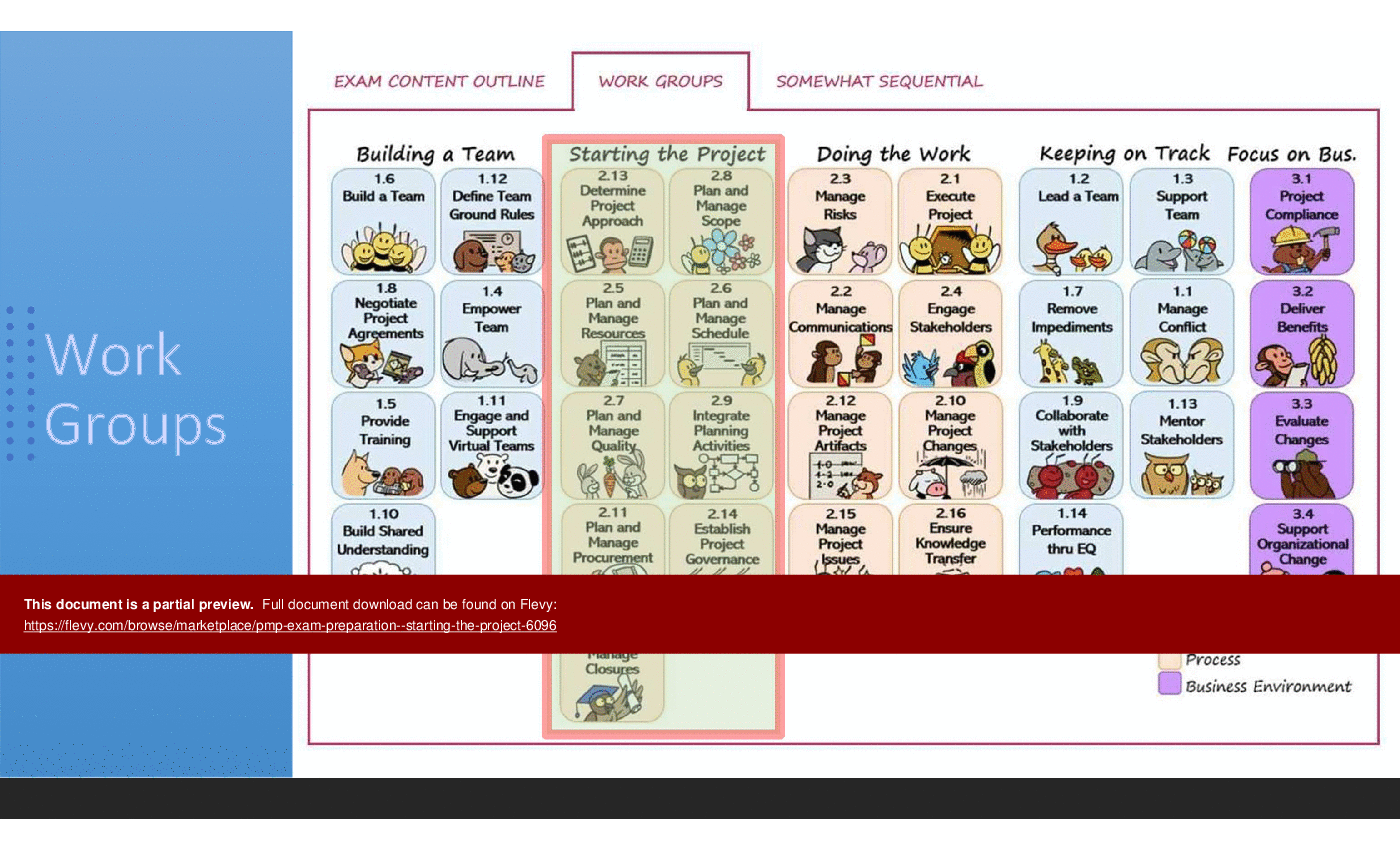
Rather than going through the ECO numerically (starting with "1.1 Manage Conflict") I decided to use the ATP Work Group sequence. That way, if someone has taken ATP training and is looking for additional study materials the book will follow the training course sequence.
Got a question about the product? Email us at support@flevy.com or ask the author directly by using the "Ask the Author a Question" form. If you cannot view the preview above this document description, go here to view the large preview instead.
Executive Summary
The "PMP Exam Preparation - Starting the Project" presentation is a meticulously crafted training module designed to align with PMI Authorized Training Partners (ATPs) and the PMBOK Guide (7th Edition). Developed by experts with extensive consulting backgrounds at leading firms such as McKinsey, Deloitte, and Capgemini, this presentation provides a structured approach to project initiation. It emphasizes the importance of understanding project methodologies, scope management, budgeting, scheduling, quality assurance, and governance. This module equips candidates with the necessary tools and knowledge to effectively prepare for the PMP certification exam, ensuring they can navigate the complexities of project management with confidence.
Who This Is For and When to Use
• Project Managers preparing for the PMP certification exam
• Team Leads and Project Coordinators involved in project initiation
• Organizational Executives overseeing project governance and methodologies
• Consultants seeking to enhance their project management skills
Best-fit moments to use this deck:
• During PMP exam preparation sessions
• In project management training workshops
• When onboarding new project team members
• For refresher courses on project initiation and methodologies
Learning Objectives
• Define project initiation processes and their significance in project management.
• Build a comprehensive project scope management plan that outlines deliverables and boundaries.
• Establish a budget and resource allocation strategy based on project requirements.
• Develop a project schedule that aligns with identified milestones and dependencies.
• Implement quality management practices to ensure deliverables meet standards.
• Integrate various planning activities into a cohesive project management plan.
• Assess and recommend appropriate project methodologies based on project characteristics.
Table of Contents
• Introduction to Project Management (page 1)
• Project Management Institute Overview (page 2)
• Project Methodologies (page 3)
• Planning Scope Management (page 4)
• Budget and Resource Management (page 5)
• Schedule Management (page 6)
• Quality Management of Deliverables (page 7)
• Integrating Planning Activities (page 8)
• Governance Structure (page 9)
• Project Closure Processes (page 10)
Primary Topics Covered
• Project Methodologies - Understanding various project methodologies, including predictive, agile, and hybrid approaches, to select the most suitable for specific projects.
• Scope Management - Techniques for defining, managing, and validating project scope to ensure all requirements are met.
• Budget Management - Strategies for estimating and managing project budgets, including contingency planning for unforeseen challenges.
• Schedule Management - Methods for creating and managing project schedules, including the use of Gantt charts and critical path analysis.
• Quality Management - Frameworks for ensuring project deliverables meet established quality standards and stakeholder expectations.
• Governance Structure - Establishing a governance framework to guide project management activities and decision-making processes.
Deliverables, Templates, and Tools
• Project Management Plan template outlining scope, budget, and schedule components.
• Scope Management Plan detailing how project scope will be defined and controlled.
• Budget Estimation Worksheet for calculating project costs and resource needs.
• Schedule Management Template for tracking project timelines and milestones.
• Quality Management Plan template specifying quality standards and control measures.
• Governance Structure Framework to define roles, responsibilities, and decision-making processes.
Slide Highlights
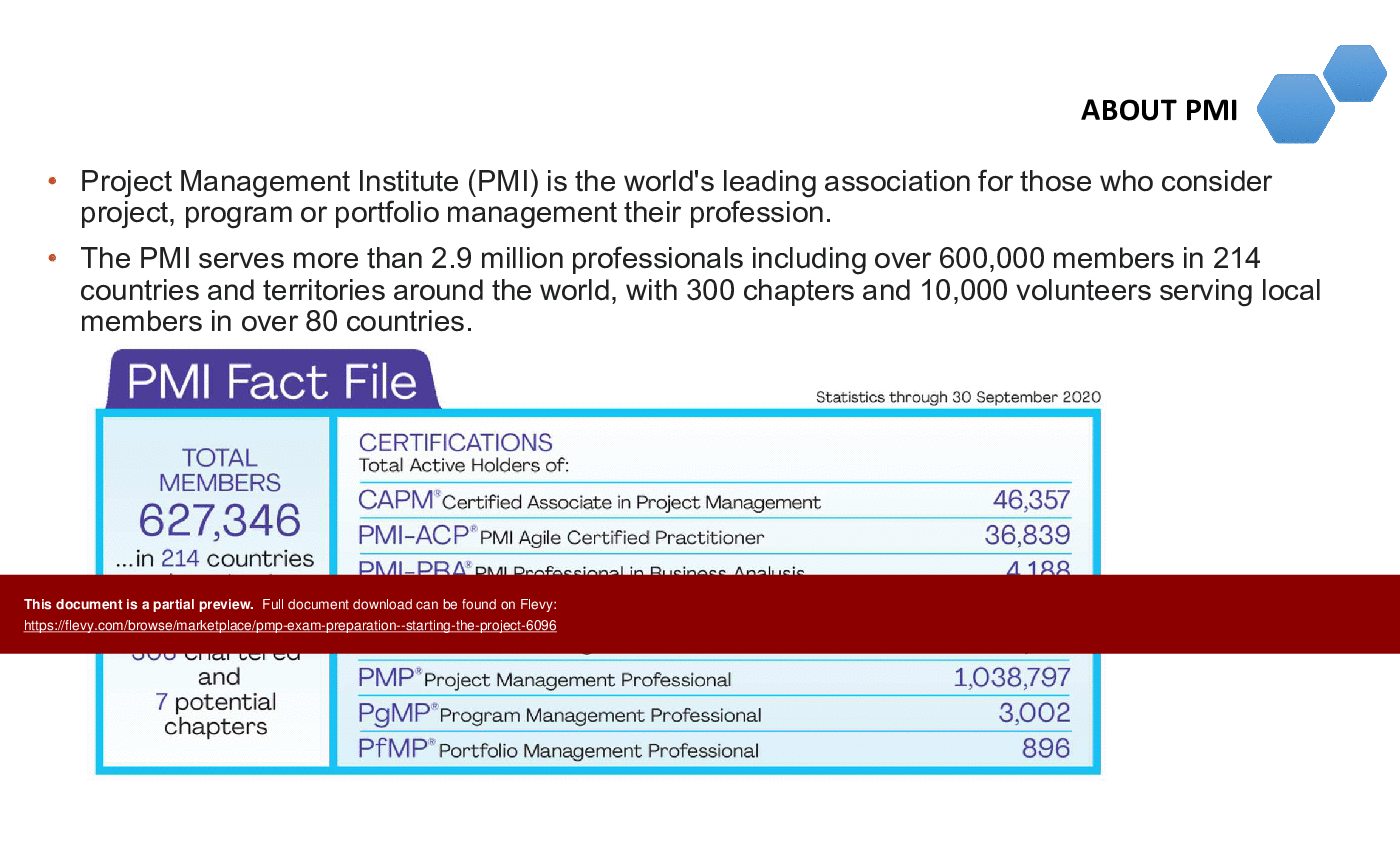
• Overview of the Project Management Institute and its global impact on project management practices.
• Comparison of traditional and agile project methodologies, emphasizing their respective strengths and weaknesses.
• Visual representation of the project scope management process, including requirements gathering techniques.
• Detailed breakdown of budgeting strategies and cost estimation methods.
• Framework for integrating various planning activities into a cohesive project management plan.
Potential Workshop Agenda
Introduction to Project Management (30 minutes)
• Overview of project management principles and PMI's role.
• Discussion on the importance of project methodologies.
Scope and Budget Management (60 minutes)
• Techniques for defining project scope and managing requirements.
• Strategies for estimating and managing project budgets.
Schedule and Quality Management (60 minutes)
• Methods for creating and managing project schedules.
• Frameworks for ensuring quality in project deliverables.
Governance and Closure Processes (30 minutes)
• Establishing a governance structure for project oversight.
• Steps for successfully closing a project or phase.
Customization Guidance
• Tailor the project management plan to reflect specific organizational goals and stakeholder expectations.
• Adjust the budget estimation worksheet to align with organizational financial practices and reporting requirements.
• Modify the governance structure framework to fit the unique decision-making processes of the organization.
Secondary Topics Covered
• Stakeholder engagement strategies for effective communication.
• Risk management techniques to identify and mitigate project uncertainties.
• Change management processes to handle project scope adjustments.
• Lessons learned documentation for continuous improvement in project management practices.
Topic FAQ
Source: Best Practices in PMP PowerPoint Slides: PMP Exam Preparation - Starting the Project PowerPoint (PPTX) Presentation Slide Deck, RadVector Consulting
This document is available as part of the following discounted bundle(s):

Save %!
PMP Exam Preparation - All You Need To Know
This bundle contains 6 total documents. See all the documents to the right.
|
Download our FREE Strategy & Transformation Framework Templates
Download our free compilation of 50+ Strategy & Transformation slides and templates. Frameworks include McKinsey 7-S Strategy Model, Balanced Scorecard, Disruptive Innovation, BCG Experience Curve, and many more. |









